
Disclosure: As an Amazon Associate, Bookish Wisdom earns from qualifying purchases. This doesn't change our picks or your price.
Spoiler warning: this analysis discusses the whole book, including the ending of Bleak House.
Quick answer: The main themes in Bleak House by Charles Dickens are the law and injustice, secrets, social responsibility, poverty and identity. Each is explained below with what it means, how it develops in the story and questions you can use for study or discussion.
Quick facts
- Book: Bleak House by Charles Dickens
- First published: 1853
- Main themes: the law and injustice, secrets, social responsibility, poverty and identity
Table of Contents
About Bleak House
The endless lawsuit of Jarndyce and Jarndyce has dragged through London's Court of Chancery for generations, ruining everyone involved. Esther Summerson, an orphan, becomes the companion of two young wards in the case, Ada Clare and Richard Carstone, at Bleak House, the home of the kind John Jarndyce. Meanwhile, the proud Lady Dedlock hides a secret, which the cunning lawyer Mr. Tulkinghorn sets out to uncover. A murder, a detective investigation and a final verdict reveal hidden connections.
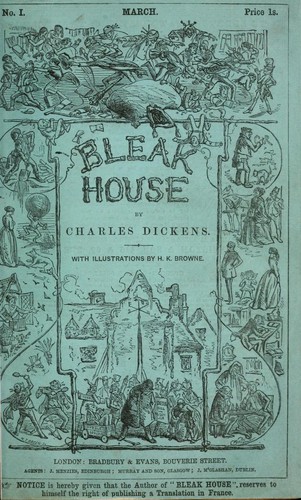
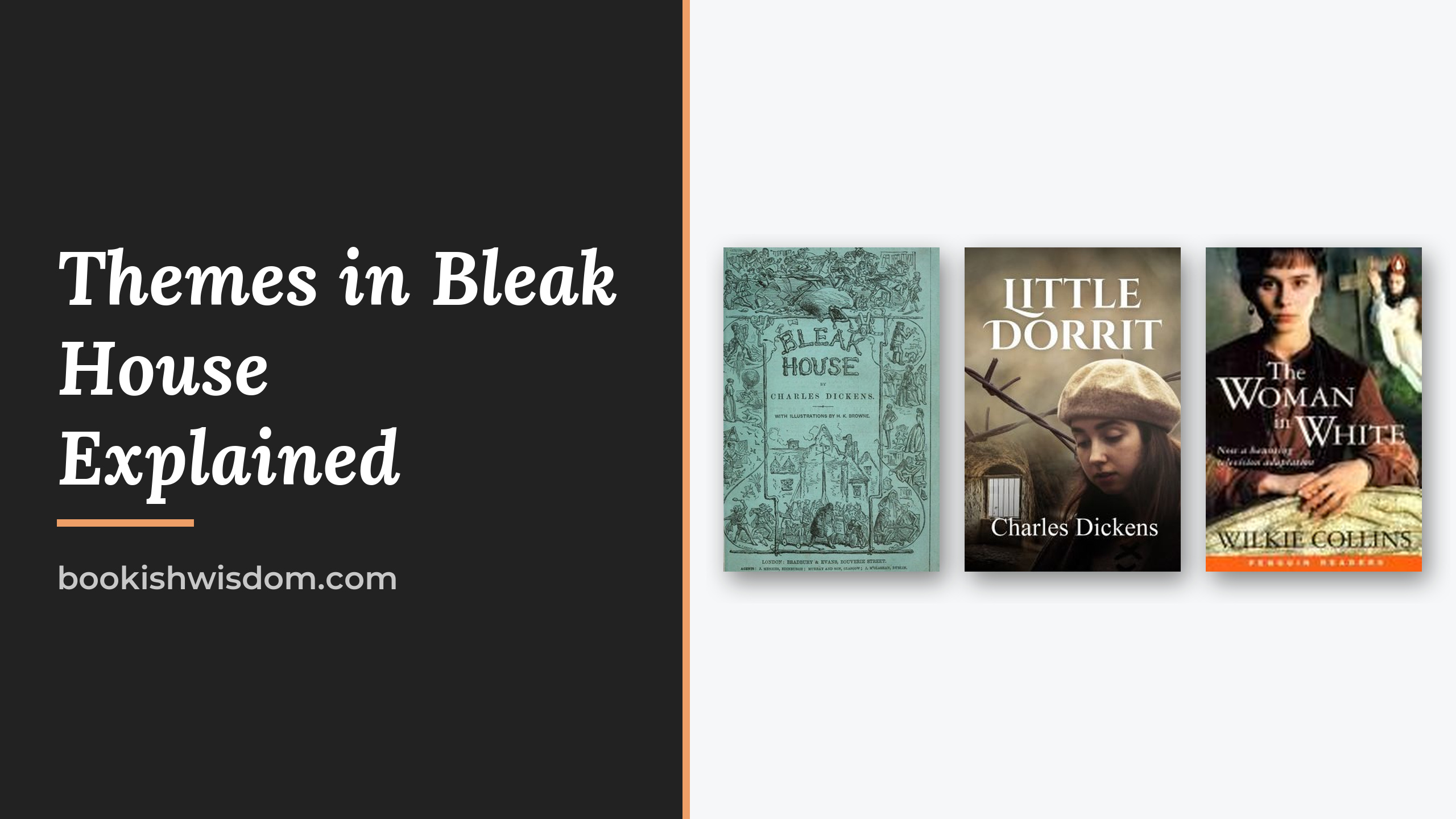
Check price of Bleak House on Amazon
The Main Themes in Bleak House
1. The law and injustice
The Court of Chancery destroys lives through delay. Dickens attacks a legal system that serves itself. Lawyers grow rich while the people in Jarndyce and Jarndyce lose health, money and hope.
Question to consider: Where in Bleak House does the law and injustice matter most to the characters, and what does Charles Dickens want readers to think about it?
2. Secrets
Lady Dedlock's past drives the plot. Secrets bring danger and pain. Mr. Tulkinghorn collects secrets as a form of power, and his murder shows where that leads.
Question to consider: Where in Bleak House does secrets matter most to the characters, and what does Charles Dickens want readers to think about it?
3. Social responsibility
Dickens criticizes those who ignore suffering, such as Mrs. Jellyby, who neglects her family for distant causes. Mrs. Jellyby's 'telescopic philanthropy' looks past her own neglected children to Africa.
Question to consider: Where in Bleak House does social responsibility matter most to the characters, and what does Charles Dickens want readers to think about it?
4. Poverty
Jo the crossing sweeper suffers and dies neglected. Dickens shows the cost of poverty. His famous death scene addresses readers directly, telling them that people like Jo are dying around them every day.
Question to consider: Where in Bleak House does poverty matter most to the characters, and what does Charles Dickens want readers to think about it?
5. Identity
Esther discovers her true parentage and finds her place. Her story moves from shame about her birth to a secure sense of who she is.
Question to consider: Where in Bleak House does identity matter most to the characters, and what does Charles Dickens want readers to think about it?
Symbols and Motifs
- The fog. The opening fog represents confusion and the murky law.
- Bleak House. Ironically a home of kindness and warmth.
- Tom-all-Alone's. The slum symbolizes neglect and disease.
- Krook's spontaneous combustion. Symbolizes a corrupt system destroying itself.
How the Themes Connect
The themes connect through the destructive power of the law and secrets. Esther's kindness offers hope, while Chancery destroys Richard. Dickens drew on real legal scandals, and the novel helped push reforms. Inspector Bucket is one of the first detectives in English fiction. The novel switches between Esther's warm first-person narration and a sharp, present-tense third-person narrator, a bold structure that gives the book two very different views of the same world. Many critics call it Dickens's greatest novel.
How to Write About the Themes of Bleak House
If you are writing an essay or preparing for class, these steps help:
- Pick one theme. A focused argument is stronger than a list of everything.
- Find evidence in the text. Point to specific scenes, characters and choices rather than general impressions.
- Explain, don't just describe. After each example, say what it shows about the theme.
- Connect to the ending. Ask how the final chapters resolve or complicate the theme.
- Consider other readings. A fair essay acknowledges that readers can disagree.
Discussion Questions
- Which of the themes above feels most relevant to your own life, and why?
- Do the characters in Bleak House handle the law and injustice well or badly?
- How does the title relate to the themes of the book?
- Would the story change if it were set in a different time or place?
- What does Charles Dickens leave unresolved, and why might that be?
Books With Similar Themes
-
Little Dorrit by Charles Dickens
-
The Woman in White by Wilkie Collins
Related: Bleak House by Charles Dickens: Summary and Key Takeaways · Bleak House Characters: A Complete Guide
Frequently Asked Questions
What is the main theme of Bleak House?
The central theme is the law and injustice, supported by secrets and social responsibility.
How many themes does Bleak House have?
This guide covers 5 main themes, but readers may find others.
Who wrote Bleak House?
Bleak House was written by Charles Dickens and first published in 1853.
Is Bleak House a good book for studying themes?
Yes. Its themes are clear enough to follow and rich enough to support essays and group discussion.
What should I read after Bleak House?
Try Little Dorrit by Charles Dickens or The Woman in White by Wilkie Collins.