
Disclosure: As an Amazon Associate, Bookish Wisdom earns from qualifying purchases. This doesn't change our picks or your price.
Spoiler warning: this analysis discusses the whole book, including the ending of Vanity Fair.
Quick answer: The main themes in Vanity Fair by William Makepeace Thackeray are social ambition, money and class, hypocrisy, love and devotion and the absence of heroes. Each is explained below with what it means, how it develops in the story and questions you can use for study or discussion.
Quick facts
- Book: Vanity Fair by William Makepeace Thackeray
- First published: 1848
- Main themes: social ambition, money and class, hypocrisy, love and devotion and the absence of heroes
Table of Contents
About Vanity Fair
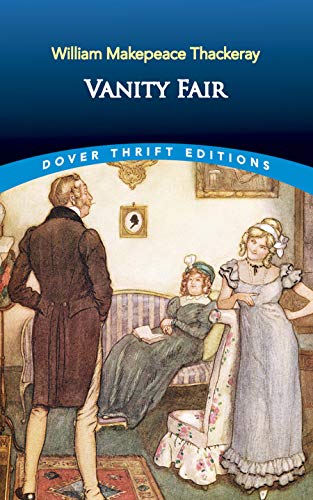
Two young women leave Miss Pinkerton's academy in London around 1813. Becky Sharp, a clever, poor orphan, is determined to rise in society by any means, while her gentle, wealthy friend Amelia Sedley is loyal to her vain fiance, George Osborne. Becky charms her way into high society, marrying Rawdon Crawley, a gambling officer, while Amelia's family loses its fortune. The Battle of Waterloo changes both lives. Becky's schemes eventually collapse, while the faithful William Dobbin loves Amelia for years before she finally recognizes his worth.
Check price of Vanity Fair on Amazon
The Main Themes in Vanity Fair
1. Social ambition
Becky Sharp climbs from poverty to high society through charm, flattery and lies. Thackeray makes her both a villain and a fascinating heroine, and readers often admire her energy even as they disapprove of her methods.
Question to consider: Where in Vanity Fair does social ambition matter most to the characters, and what does William Makepeace Thackeray want readers to think about it?
2. Money and class
Everyone in the novel judges others by money and rank. When the Sedleys go bankrupt, their friends abandon them, showing how shallow society's loyalties are.
Question to consider: Where in Vanity Fair does money and class matter most to the characters, and what does William Makepeace Thackeray want readers to think about it?
3. Hypocrisy
Thackeray exposes the gap between respectable appearances and selfish behavior. Even supposedly good characters act from vanity.
Question to consider: Where in Vanity Fair does hypocrisy matter most to the characters, and what does William Makepeace Thackeray want readers to think about it?
4. Love and devotion
Dobbin's faithful love for Amelia contrasts with George's selfishness. Thackeray questions whether devotion is wise when it is not returned.
Question to consider: Where in Vanity Fair does love and devotion matter most to the characters, and what does William Makepeace Thackeray want readers to think about it?
5. The absence of heroes
Thackeray subtitled the book 'A Novel without a Hero'. No one is entirely good, and the narrator invites readers to judge them all.
Question to consider: Where in Vanity Fair does the absence of heroes matter most to the characters, and what does William Makepeace Thackeray want readers to think about it?
Symbols and Motifs
- Vanity Fair. The title represents a world where everyone is buying and selling status and appearances.
- The puppet show. The narrator presents characters as puppets, suggesting society controls people's lives.
- Waterloo. The battle symbolizes the sudden changes of fortune that affect everyone.
- Becky's French. Her fluent French symbolizes her cleverness and outsider status.
How the Themes Connect
The themes connect through Thackeray's satire of a society driven by ambition, money and hypocrisy. Becky and Amelia represent opposite ways of surviving, and neither is fully admirable. The novel appeared in monthly parts with Thackeray's own illustrations, and its ironic narrator speaks directly to readers. It has been adapted several times, including a 2004 film with Reese Witherspoon and a 2018 ITV series. Readers still debate whether Becky is a villain or a survivor making the best of a world that gives poor women few choices.
How to Write About the Themes of Vanity Fair
If you are writing an essay or preparing for class, these steps help:
- Pick one theme. A focused argument is stronger than a list of everything.
- Find evidence in the text. Point to specific scenes, characters and choices rather than general impressions.
- Explain, don't just describe. After each example, say what it shows about the theme.
- Connect to the ending. Ask how the final chapters resolve or complicate the theme.
- Consider other readings. A fair essay acknowledges that readers can disagree.
Discussion Questions
- Which of the themes above feels most relevant to your own life, and why?
- Do the characters in Vanity Fair handle social ambition well or badly?
- How does the title relate to the themes of the book?
- Would the story change if it were set in a different time or place?
- What does William Makepeace Thackeray leave unresolved, and why might that be?
Books With Similar Themes
-
Pride and Prejudice by Jane Austen
-
The Way We Live Now by Anthony Trollope
Related: Vanity Fair by William Makepeace Thackeray: Summary and Key Takeaways · Vanity Fair Characters: A Complete Guide
Frequently Asked Questions
What is the main theme of Vanity Fair?
The central theme is social ambition, supported by money and class and hypocrisy.
How many themes does Vanity Fair have?
This guide covers 5 main themes, but readers may find others.
Who wrote Vanity Fair?
Vanity Fair was written by William Makepeace Thackeray and first published in 1848.
Is Vanity Fair a good book for studying themes?
Yes. Its themes are clear enough to follow and rich enough to support essays and group discussion.
What should I read after Vanity Fair?
Try Pride and Prejudice by Jane Austen or The Way We Live Now by Anthony Trollope.