
Disclosure: As an Amazon Associate, Bookish Wisdom earns from qualifying purchases. This doesn’t change our picks or your price.
Quick answer: If you loved Thinking, Fast and Slow by Daniel Kahneman, try Predictably Irrational by Dan Ariely, Nudge by Richard H. Thaler, Noise by Daniel Kahneman, The Black Swan by Nassim Nicholas Taleb, Thinking in Bets by Annie Duke and The Undoing Project by Michael Lewis.
Thinking, Fast and Slow is Daniel Kahneman’s summary of a lifetime of research on how the mind works. He describes two systems of thinking, a fast, automatic System 1 and a slow, deliberate System 2, and shows how shortcuts lead us into predictable errors, from anchoring to loss aversion. The book won him wide acclaim after he received the Nobel Prize in Economic Sciences in 2002 for his work with Amos Tversky. The picks below share its mix of psychology, economics and storytelling, and they help readers make better decisions. They are adult nonfiction, mostly accessible to general readers.
Table of Contents
Why Readers Love Thinking, Fast and Slow
Readers love Thinking, Fast and Slow because it explains why we often get things wrong. Kahneman gives clear examples, such as the bat-and-ball puzzle, the Linda problem and the illusion of a stock-picker’s skill, that readers can test on themselves. He is candid about his own mistakes, and he writes with humility and humor. The book is long and sometimes dense, but it rewards patient reading, and many people say it changed how they think about forecasts, risk and expertise. It’s often cited by business leaders, doctors and policymakers.
How We Chose These Books
Every pick below shares at least one thing readers loved about Thinking, Fast and Slow: its characters, its mood, its setting or the questions it raises. We mixed well-known favorites with a few less obvious choices, and we noted the genre and who each book suits best in the table, so you can scan for the right fit before you read the blurbs.
We kept every description spoiler-free and flagged mature content where it matters, since some of these books are written for adults and others suit teens. If you’re not sure where to start, the tips near the end of this list match each pick to what you loved most. The FAQ at the bottom answers the questions readers ask most often.
Quick Picks at a Glance
| Book | Author | Type | Best For |
|---|---|---|---|
| Predictably Irrational | Dan Ariely | Behavioral economics | Engaging, playful experiments |
| Nudge | Richard H. Thaler and Cass R. Sunstein | Behavioral economics | Designing better choices |
| Misbehaving | Richard H. Thaler | Behavioral economics | A story of a field |
| Noise | Daniel Kahneman | Decision science | Kahneman’s later work |
| The Black Swan | Nassim Nicholas Taleb | Risk | Rare, high-impact events |
| Thinking in Bets | Annie Duke | Decision-making | Practical decisions under uncertainty |
| The Undoing Project | Michael Lewis | History of science | The story behind the science |
| Influence | Robert B. Cialdini | Psychology | The psychology of persuasion |
| Blink | Malcolm Gladwell | Psychology | Fast judgment and intuition |
| The Art of Thinking Clearly | Rolf Dobelli | Psychology | Short, practical chapters |
| Superforecasting | Philip E. Tetlock and Dan Gardner | Forecasting | Better predictions |
| How Not to Be Wrong | Jordan Ellenberg | Math | Math for everyday decisions |
| The Righteous Mind | Jonathan Haidt | Psychology | Why we disagree |
| Stumbling on Happiness | Daniel Gilbert | Psychology | Predicting our own feelings |
| Freakonomics | Steven D. Levitt and Stephen J. Dubner | Economics | Surprising connections |
1. Predictably Irrational by Dan Ariely
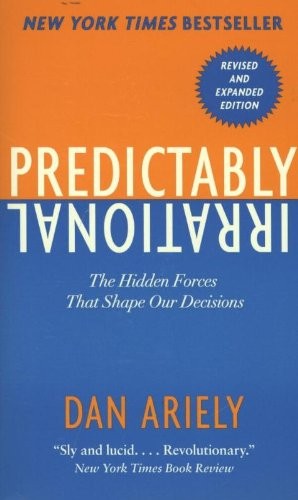
Ariely describes clever experiments that show how people behave irrationally in consistent ways, from pricing to honesty. It’s short, funny and an excellent starting point.
2. Nudge by Richard H. Thaler and Cass R. Sunstein

The authors show how small changes in how choices are presented can improve decisions about health, money and the environment. It shaped many government policies.
3. Misbehaving by Richard H. Thaler

Thaler’s account of how he and others founded behavioral economics by noticing that humans don’t act like the rational agents of textbooks. It’s witty and personal.
4. Noise by Daniel Kahneman
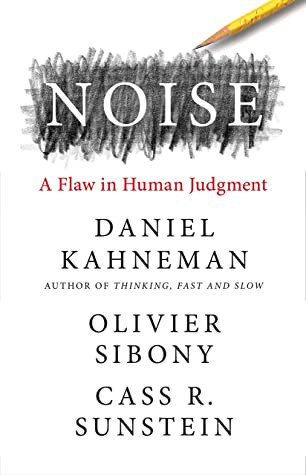
Kahneman and his co-authors show how random variation in judgments, not just bias, causes errors in courts, medicine and business. It offers practical ways to reduce noise.
5. The Black Swan by Nassim Nicholas Taleb
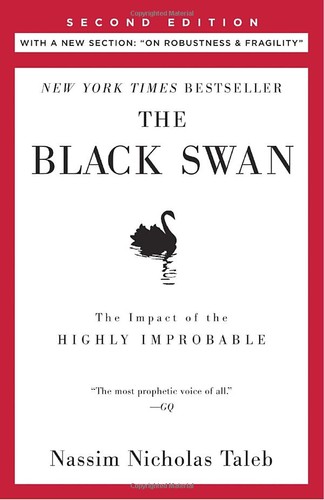
Taleb argues that unpredictable events shape history and that we systematically underestimate them. It’s provocative and combative, and a bestseller after the 2008 financial crisis.
6. Thinking in Bets by Annie Duke
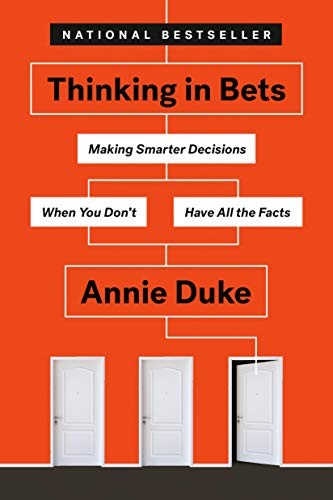
A former professional poker player explains how to think in probabilities, separate decision quality from outcomes and make better choices. It’s clear and practical.
7. The Undoing Project by Michael Lewis
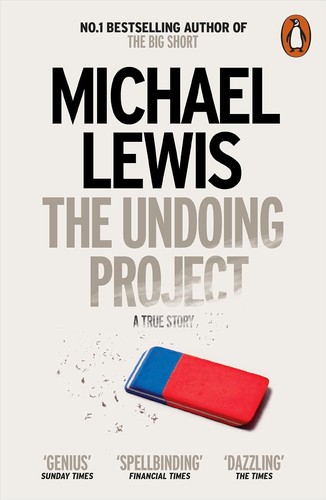
Lewis tells the story of Kahneman and Tversky’s friendship and their groundbreaking work. It’s lively and moving.
8. Influence by Robert B. Cialdini
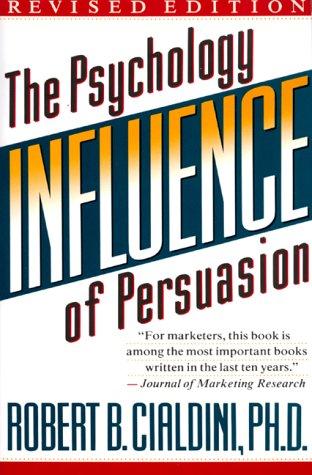
Cialdini describes six principles of persuasion, such as reciprocity and social proof, based on research. It’s a classic for marketers and general readers.
9. Blink by Malcolm Gladwell

Gladwell explores how quick decisions can be remarkably accurate or terribly wrong. It’s fast and entertaining, though less rigorous than Kahneman.
10. The Art of Thinking Clearly by Rolf Dobelli
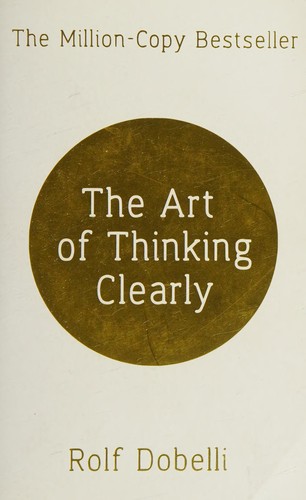
A collection of 99 brief essays on common thinking errors, from survivorship bias to the sunk cost fallacy. It’s easy to read in small pieces.
11. Superforecasting by Philip E. Tetlock and Dan Gardner
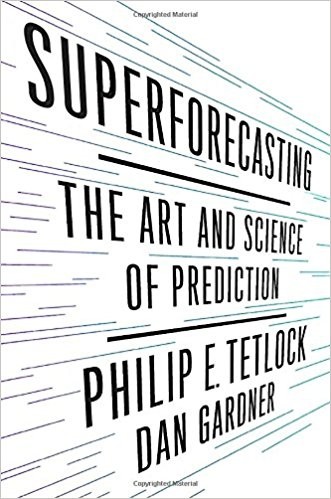
Tetlock’s research on people who make surprisingly accurate predictions, and what they do differently. It’s practical and humbling.
12. How Not to Be Wrong by Jordan Ellenberg
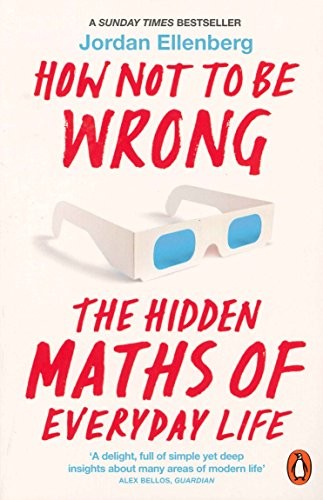
A mathematician shows how mathematical thinking helps us avoid common errors, from lotteries to polls. It’s witty and accessible.
13. The Righteous Mind by Jonathan Haidt

Haidt explores how moral intuitions come first and reasoning follows, which helps explain political and cultural divides. It’s thoughtful and widely discussed.
14. Stumbling on Happiness by Daniel Gilbert
Gilbert shows why we are so bad at predicting what will make us happy. It’s funny and filled with experiments.
15. Freakonomics by Steven D. Levitt and Stephen J. Dubner
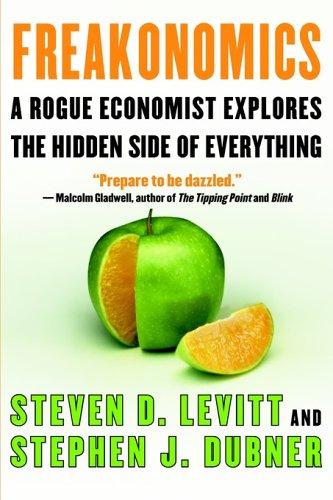
The authors use data to answer unusual questions about crime, teachers and parenting. It’s entertaining and popular.
How to Pick Your Next Decision-Making Read
- Want a gentler start? Predictably Irrational and Nudge.
- Want practical advice? Thinking in Bets and The Art of Thinking Clearly.
- Want the story behind the science? The Undoing Project.
- Want more Kahneman? Noise.
- Want risk and uncertainty? The Black Swan and Superforecasting.
- Want something fun? Freakonomics and Blink.
A Quick Guide to Kahneman’s Key Ideas
Some of the ideas you’ll meet in the book include anchoring, where a number you hear first shapes your estimate; availability, where dramatic examples feel more common than they are; loss aversion, where losses hurt more than equal gains; and the planning fallacy, where we underestimate how long tasks will take. Kahneman also describes the peak-end rule, which says we judge experiences by their peak and ending rather than their duration. Knowing these terms makes it easier to spot biases in daily life, and many of the books in this list apply them to specific areas.
Kahneman and Tversky’s Partnership
The book is partly a tribute to Amos Tversky, Kahneman’s collaborator for many years, who died in 1996 before the Nobel Prize was awarded. Michael Lewis tells their friendship in The Undoing Project, a lively account of how two very different Israeli psychologists changed economics, medicine and public policy. If you enjoy Kahneman’s own telling, Lewis’s version adds personal stories and context. Together the books give a picture of how scientific ideas emerge from conversation and disagreement.
How to Use Behavioral Science in Daily Life
You can’t remove your biases, but you can design around them. Use checklists for important decisions, wait before reacting to a first impression and seek out a view that disagrees with yours. Keep a decision journal so you can compare predictions with outcomes. For group decisions, ask people to write down their opinions before discussing, to avoid anchoring. These small habits, recommended in several books on this list, help you move from fast, automatic thinking to deliberate thinking when it matters.
A Reading Order for Beginners
If you’re new to the field, you may find Thinking, Fast and Slow demanding. A gentler path is to start with Predictably Irrational or Nudge, both shorter and more playful, then move to Kahneman. After that, try Thinking in Bets for poker-based practical advice, and Noise for Kahneman’s later work on inconsistent judgments. If you like stories, read The Undoing Project at any point. Whichever order you choose, take notes on the examples, and test them on friends. They’re more fun when you see the effects yourself.
A Cheat Sheet of Common Cognitive Biases
Several biases appear again and again in these books. Confirmation bias means we notice evidence that supports what we already think. Anchoring means the first number we hear sways our judgment. The sunk cost fallacy makes us keep investing in something because we’ve already invested. Survivorship bias makes us study successes and forget failures. Hindsight bias makes past events seem predictable. Naming a bias doesn’t make you immune, but it helps you catch it in the moment and ask a better question, such as what would change my mind?
A Simple Decision Checklist
Before an important decision, try a short checklist drawn from these books. First, write down what you expect to happen and how confident you are. Second, ask what information you might be missing, and who disagrees with you. Third, imagine it’s a year from now and the decision failed: what went wrong? Fourth, check whether you’re being swayed by recent events, a single story or sunk costs. Finally, set a date to review the outcome. Even five minutes with this list can improve judgment, and it builds the habit of slow thinking when it counts.
Related: Predictably Irrational summary and key takeaways and Thinking in Bets summary and key takeaways.
Frequently Asked Questions
What book is most like Thinking, Fast and Slow?
Predictably Irrational and Nudge are the most accessible companions, and Noise is Kahneman’s follow-up.
Is Thinking, Fast and Slow hard to read?
It’s long and dense in parts. Many readers read it in small sections or start with a shorter book.
What are System 1 and System 2?
System 1 is fast, automatic thinking and System 2 is slow, deliberate thinking.
Who won the Nobel Prize, Kahneman or Tversky?
Kahneman won the 2002 Nobel Prize in Economic Sciences. Tversky had died in 1996 and the prize isn’t awarded posthumously.
What should I read after Thinking, Fast and Slow?
Try Thinking in Bets for practical use, or The Undoing Project for the story behind the research.